The physical foundations
Build a foundation in matter, physical properties and measurement before exploring how aircraft components respond to forces and energy.
Matter · Physical properties · Mass and density

Eight connected sections. Explore the physics behind the aircraft—from matter and mechanical forces to heat, light and sound.
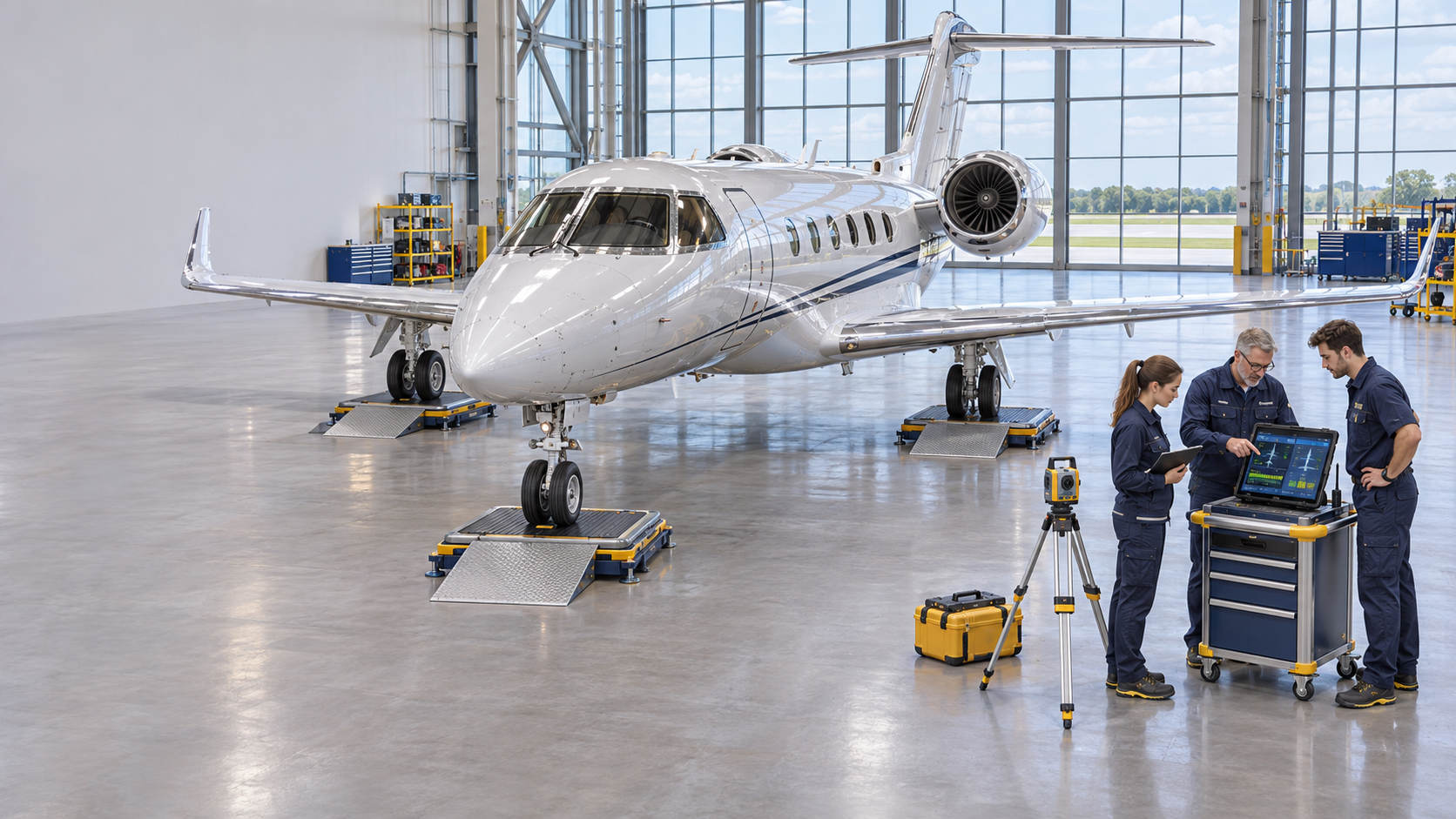
Digital scales measure the supported load. Physics explains how the readings relate to weight, moments and balance. These four lessons provide the core foundations.
Distinguish mass from weight and understand gravitational force.
LESSON 2.3 ↗Understand how supporting reactions balance an aircraft’s weight.
LESSON 2.4 ↗Relate a force’s turning effect to its perpendicular lever arm.
LESSON 2.5 ↗Connect load position, total moment and centre of gravity.
Select a section to explore its focus.
The physical foundations
Build a foundation in matter, physical properties and measurement before exploring how aircraft components respond to forces and energy.
The science behind weight and balance
Connect forces and moments to equilibrium, load distribution and the centre of gravity. Explore how materials respond to loading.
Distinguish mass from weight and understand gravitational force.
Understand how supporting reactions balance an aircraft’s weight.
Relate a force’s turning effect to its perpendicular lever arm.
Connect load position, total moment and centre of gravity.
Describe how things move
Relate position, speed, velocity and acceleration to the motion of mechanical systems.
Explain why motion changes
Connect force to changes in motion, and follow work, energy and momentum through mechanical applications.
Follow the flow
Understand fluid behaviour and the relationships between pressure, flow and forces in aviation applications.
Understand pressure and temperature
Explore temperature, heat, gas behaviour and energy transfer, including the assumptions behind thermodynamic process models.
See the physics of inspection
Explore light and optical behaviour as a foundation for understanding observations made with inspection equipment.
Interpret waves and sound
Relate frequency and wavelength, distinguish wave effects, and explore sound levels, Doppler changes and ultrasonic inspection principles.
Curriculum design preview: section overview and selected lesson references. The complete third-edition lesson index and lesson access will be connected from the final server inventory.
Follow the learning roadmap through lessons, examples and assessments.